UAE VAT return deadlines are strictly enforced, and even small delays can lead to automatic penalties.
Filing frequency (monthly or quarterly) is assigned by the FTA, and businesses must follow their specific cycle without exception.
Incorrect or late returns attract escalating financial penalties, increasing both compliance cost and audit risk.
Errors must be corrected through voluntary disclosure, which helps reduce penalties and demonstrate regulatory transparency.
A structured compliance calendar improves accuracy and deadline control, reducing last-minute errors.
Expert review strengthens audit readiness and risk protection, especially for complex VAT positions.
➤ Introduction
In 2026, many UAE businesses are facing compliance issues not because of tax evasion, but due to missed VAT deadlines, incorrect returns, or delayed error corrections.
With stricter enforcement, faster data matching, and increased scrutiny on VAT submissions, even a small mistake can lead to penalty escalation, rejected returns, or compliance flags. This risk is especially high for businesses that file VAT returns without a clear compliance calendar or fail to correct errors through VAT voluntary disclosure.
With late‑filing fines, compounding late‑payment charges, and error‑based penalties that can reach up to 300% of unpaid VAT, leaving mistakes uncorrected has become significantly more expensive in 2026.
Understanding VAT return filing timelines, knowing whether you fall under quarterly or monthly filing, and acting promptly when errors are discovered is essential to avoid unnecessary penalties in 2026.
This guide explains how VAT return filing works in the UAE, key deadlines, penalties, and how businesses can restore compliance when issues arise.
➤ VAT Return Filing in the UAE: 2026 Overview
All VAT-registered businesses in the UAE are required to file VAT returns as per their assigned tax period.
VAT return filing is regulated by the Federal Tax Authority, and applies to:
Mainland businesses
Free Zone entities
SMEs, startups, and enterprises
Businesses filing quarterly or monthly VAT returns
Failure to file accurately and on time exposes businesses to financial penalties and audit risk.
➤ Quarterly vs. Monthly VAT Returns: What Applies to You?
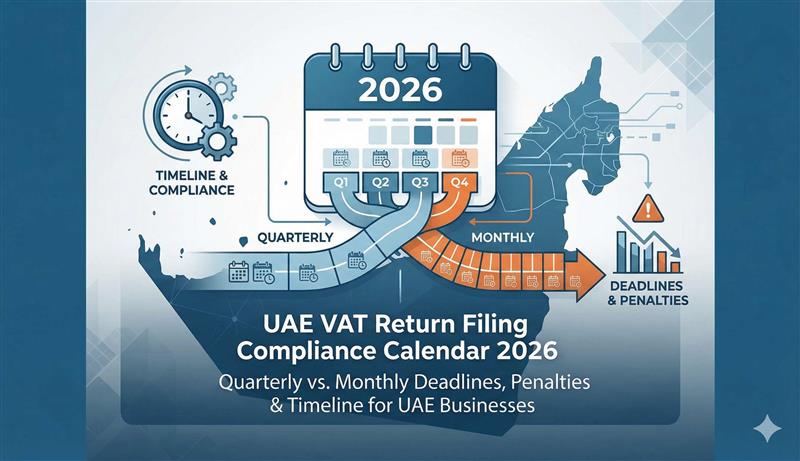
Quarterly VAT Return UAE
Most VAT-registered businesses in the UAE file quarterly VAT returns.
Filing frequency: Every 3 months
Deadline: 28 days from the end of the tax period
Applicable to: SMEs and mid-sized businesses
Monthly VAT Returns
Some businesses are assigned monthly VAT filing due to their transaction volume or risk profile.
Filing frequency: Every month
Deadline: 28 days from the end of the month
Applicable to: High-turnover businesses, complex VAT profiles, selected entities
Your filing frequency is assigned by the FTA and cannot be changed without approval.
As a general guideline, businesses with annual taxable supplies below AED 150 million are typically assigned quarterly returns, while those at or above AED 150 million are often placed on monthly filing, subject to FTA discretion.
Both the VAT return and the VAT payment must reach the FTA by the deadline, and the exact due date for each tax period is shown in your EmaraTax account, which should be checked regularly.
Missing the deadline by even one day can trigger penalties.
Key Deadline Rule
VAT return due date: 28 days after the tax period ends
If the deadline falls on a weekend or public holiday, it moves to the next working day
The FTA may set different due dates in specific cases, so the EmaraTax dashboard should always be treated as the final reference for deadlines.Businesses should maintain a VAT return filing compliance calendar to avoid deadline slippage.
➤ Common VAT Return Errors UAE Businesses Discover Late
Many businesses only identify VAT issues after filing, internal review, or FTA notification.
Common issues include:
Incorrect output VAT reporting
Input VAT claimed on ineligible expenses
Errors in reverse-charge transactions
Missing VAT on adjustments or credit notes
Data mismatch between returns and accounting records
When a VAT error is identified after submission, businesses must use VAT voluntary disclosure.
When Form 211 Is Required
Errors that affect your VAT return, tax assessment, or refund claim.
Understated or overstated VAT liability in a previously filed return.
Misreported supplies, input VAT, or reverse‑charge transactions.
Errors discovered after submission that cannot be corrected in the next return.
VAT voluntary disclosure allows businesses to correct errors transparently and reduce compliance risk.
Under current rules, VAT errors must generally be disclosed within 20 business days of being discovered, and voluntary disclosure via Form 211 attracts fixed and percentage‑based penalties that are lower than those applied when the FTA finds errors first.
Delaying disclosure often results in higher penalties during audits.
FTA VAT Penalties 2026: What’s at Stake
VAT penalties in 2026 are increasingly enforcement-driven.
Potential penalties include:
Late VAT return filing penalties: AED 1,000 for the first late filing and AED 2,000 if repeated within 24 months.
Late VAT payment penalties: 2% of unpaid VAT immediately after the due date, plus 4% per month on the outstanding amount, up to a cap of 300%.
Penalties for incorrect VAT returns or voluntary disclosures: fixed fines (for example AED 1,000–2,000) and percentage‑based penalties of 5%–50% of any underpaid VAT, depending on when the error is corrected.
Penalties for failing to submit voluntary disclosure when required, with higher percentages applied if the FTA discovers errors during an audit.
For repeated non-compliance, businesses may face enhanced scrutiny or audit selection.
➤ Why VAT Return Compliance Matters for UAE Businesses
Poor VAT compliance impacts more than tax records.
Risks include:
Cash-flow strain due to accumulated penalties
Delays in refunds and clearance certificates
License renewal or restructuring complications
Increased audit probability
Reputational risk with regulators and partners
For businesses seeking compliance restoration, timely correction is critical.
➤ How ASC Global Supports VAT Return Compliance & Error Resolution
ASC Global supports UAE businesses with end-to-end VAT compliance, including high-risk and corrective scenarios.
Our services include:
VAT return preparation and review
Compliance calendar management
Error identification and impact assessment
VAT voluntary disclosure (Form 211) support
Rejected return correction handling
FTA clarification and response support
Audit-ready VAT documentation
We help businesses restore compliance, reduce penalties, and prevent repeat issues.
Q1. Is VAT return filing mandatory even if there is no activity?
A1. Yes. Nil returns must still be filed within the deadline.
Q2. What happens if my VAT return is rejected by the FTA?
A2. Rejected returns must be corrected and resubmitted promptly, and if the rejection relates to errors in a previously filed period, a voluntary disclosure (Form 211) may be required to correct the VAT position formally.
Q3. Can VAT voluntary disclosure reduce penalties?
A3. In many cases, timely disclosure helps mitigate penalty severity.
Q4. Does quarterly filing mean lower compliance risk?
A4. No. Accuracy and timeliness matter regardless of filing frequency.
Q5. How far back can the FTA audit VAT returns?
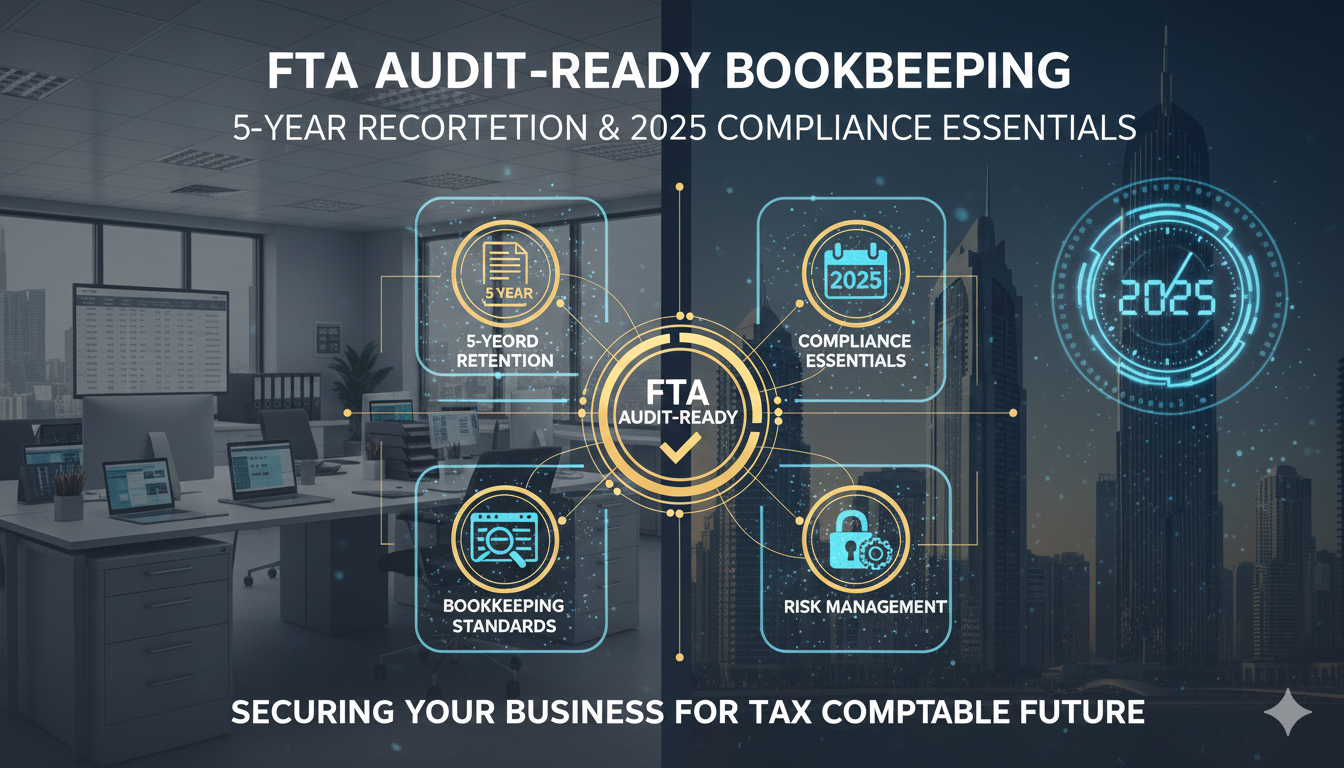
A5. The FTA can generally audit VAT periods going back several years, and businesses must retain VAT records for at least 5 years from the end of each tax period, with longer retention for certain assets such as real estate.
➤ Conclusion
In 2026, VAT return filing in the UAE is no longer a routine task. With tighter controls, faster enforcement, and higher penalties, businesses must treat VAT compliance as a core financial responsibility.
Whether you are managing quarterly filings, monthly submissions, or correcting past errors through voluntary disclosure, timely action is the key to avoiding penalties and restoring compliance.
Professional oversight ensures VAT obligations are met accurately, consistently, and defensibly.
Get Expert VAT Filing Calendar & Compliance Support Today
 Risk Advisory
 Tech & Cyber Security
 Merger & Acquisition
 Due Diligence
 Business Advisory
 Business Setup & PRO
 Corporate Tax Advisory
 Accounting & Assurance
 VAT Advisory