
In many UAE organisations, compliance and Anti-Money Laundering (AML) functions exist side by side — but not together. They may sit in different folders, different departments, and sometimes even report through different management lines. On paper, both frameworks appear complete. Policies are drafted. Risk assessments are updated. Reports are prepared.
Yet in practice, these systems often operate independently.
The compliance team focuses on governance filings, regulatory reporting, and policy documentation. The AML function manages customer due diligence, suspicious transaction monitoring, and risk classification. Senior management assumes that both areas are functioning effectively.
However, regulators do not review departments in isolation. They assess control effectiveness across the organisation.
In 2026, fragmented compliance structures are increasingly identified as structural weaknesses during supervisory inspections across mainland companies, free zone entities, DNFBPs, and regulated professionals. The issue is rarely the absence of policies. It is the absence of integration.
Integration is what makes a control framework defensible.
The UAE’s regulatory environment has matured significantly over the past several years. Authorities now expect organisations to demonstrate not only documented policies but operational cohesion. During inspections, regulators look for:
AML is no longer viewed as a standalone technical compliance requirement. It forms part of the broader governance and risk architecture of the organisation. If AML risks are not embedded within enterprise risk management, internal control frameworks, and board-level reporting, the organisation appears fragmented.
Fragmentation increases exposure because it creates blind spots — and regulators focus precisely on blind spots.
Across UAE entities of various sizes and sectors, a recurring pattern is observed: compliance and AML operate as parallel systems rather than a unified framework.
Common structural gaps include:
This separation creates duplication in some areas and omissions in others. Monitoring efforts may overlap inefficiently, while key risk indicators fail to reach executive oversight.
From a regulatory perspective, such separation signals structural weakness. Even when individual components function adequately, lack of integration undermines overall control effectiveness.
A unified Compliance and AML framework does not mean increasing paperwork or creating additional bureaucracy. It means aligning existing systems so that governance, risk management, and compliance operate cohesively.
A truly integrated framework includes the following structural elements:
Senior management oversight must explicitly include AML responsibilities. Board reports should reflect AML risk indicators alongside operational and financial metrics. Governance charters should clearly define accountability for both compliance and AML functions.
When AML oversight is visible at leadership level, regulatory confidence strengthens.
AML risk assessments should not exist in isolation. Customer risk, geographic exposure, product risk, and transaction risk must feed into the broader enterprise risk profile. Corporate risk registers should reference AML risk factors where relevant.
Separate risk documents without cross-reference suggest structural disconnection.
Internal control testing, compliance reviews, and AML monitoring should operate within a coordinated review calendar. Findings should be consolidated into a single remediation roadmap, with documented follow-up and management sign-off.
Unified monitoring prevents duplication and strengthens accountability.
Inspection readiness depends on evidence. A centralised documentation structure ensures policies, monitoring logs, training records, risk updates, and escalation reports are aligned and accessible.
Scattered documentation weakens defensibility.
Suspicious transaction reporting, internal escalation pathways, and regulatory communications must follow clearly documented reporting lines. Escalation should integrate with governance oversight rather than remain confined within the AML function.
Consider a mid-sized real estate advisory firm operating in Dubai. The organisation maintained comprehensive AML documentation and had an established compliance department. Risk assessments were updated annually. Monitoring reviews were conducted.
However, AML reports were not presented during board meetings. Risk updates were not integrated into the enterprise risk register. Monitoring reviews were documented separately from compliance audit findings.
During a supervisory inspection, regulators questioned how AML risk was communicated to senior management. The firm was not non-compliant. Yet it struggled to demonstrate structural integration.
Corrective action required governance alignment — not rewriting AML policies.
This scenario reflects a broader pattern seen across UAE organisations.
While regulatory defensibility is critical, integration offers operational advantages as well.
A unified control framework improves:
For SMEs and mid-sized entities in particular, integration reduces administrative complexity. Rather than managing separate compliance streams, businesses operate under one coherent risk governance structure.
Strong frameworks create operational confidence, not just regulatory compliance.
Organisations should assess their current structure honestly. Warning indicators may include:
If these conditions apply, the organisation may benefit from structural review.
Developing an integrated Compliance and AML structure requires deliberate alignment. Practical steps include:
The objective is clarity. Clarity strengthens defensibility.
Regulatory expectations in the UAE continue to evolve. Authorities increasingly evaluate:
Standalone AML manuals or generic compliance checklists are no longer sufficient. Regulators assess whether the organisation’s control system functions as one cohesive structure.
If alignment cannot be demonstrated, regulatory confidence weakens — even when individual policies appear robust.
Q1. What is a unified Compliance and AML control framework?
A1. It is an integrated governance and risk structure where AML controls align with broader compliance systems, ensuring consistent reporting, monitoring, oversight, and documentation across the organisation.
Q2. Why do regulators expect AML integration with compliance?
A2. AML risk is considered part of enterprise risk. Regulators assess whether organisations demonstrate structured governance, effective oversight, and cohesive internal controls rather than isolated compliance functions.
Q3. How often should a control framework be reviewed?
A3. At minimum annually, and additionally whenever regulatory changes occur or the organisation undergoes structural or operational shifts.
If compliance and AML operate separately within your organisation, it may be time to evaluate whether your structure would withstand regulatory scrutiny in 2026.
ASC-Global UAE has supported over 150 UAE entities in designing and strengthening integrated compliance frameworks that align governance, documentation, and risk oversight. Our advisory approach focuses on structural alignment — not just policy drafting.
To assess whether your integrated Compliance and AML control framework meets current UAE regulatory expectations, contact ASC-Global UAE:
📞 Call: +971503287722
💬 WhatsApp: https://wa.me/971503287722
🌐 Visit: www.ascglobal.ae
📩 Email: info@ascglobal.ae
📍 Office 04-1803, 18th Floor | One by Omniyat, Business Bay, Dubai
Partner with ASC-Global UAE to build one control framework that truly works.
Need more information on Compliance and Anti-Money Laundering: Building One Control Framework That Works?
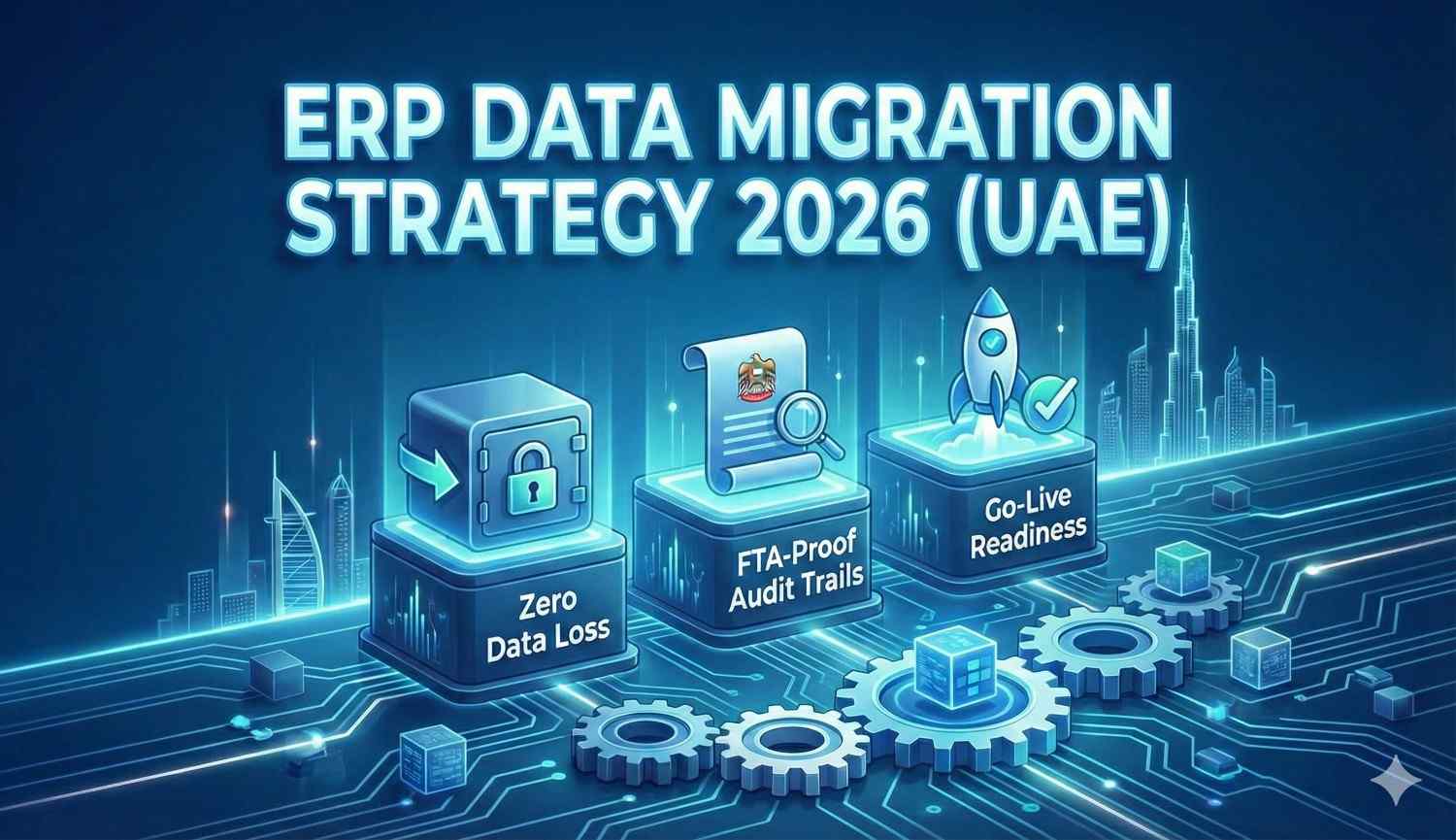 Tech & Cyber Security
Your company just signed off on a multi-million dirham ERP system. The vendor promised better visibility, faster reporti...
Read More
Office 04 - 1803, 18th floor, One by Omniyat Business bay, Dubai
302-18 Edgecliff Golfway, North York, Toronto, Ontario M3C 3A3
Via F.lli Gabba 3, 20121 – Milan, Italy
RM2106, Huishangsha Edifice, No.37, Baoshi West RD, Shiyan Town, Bao’an District, Shenzhen - 518108, China
C-100, Sector 2, Noida (UP), Delhi NCR, India 201301
One Raffles Place, Tower 1, 27-03 Singapore - 048616
 Merger & Acquisition
 Due Diligence
 Business Advisory
 Business Setup & PRO
 Corporate Tax Advisory
 Accounting & Assurance
 Risk Advisory
 Tech & Cyber Security
 VAT Advisory