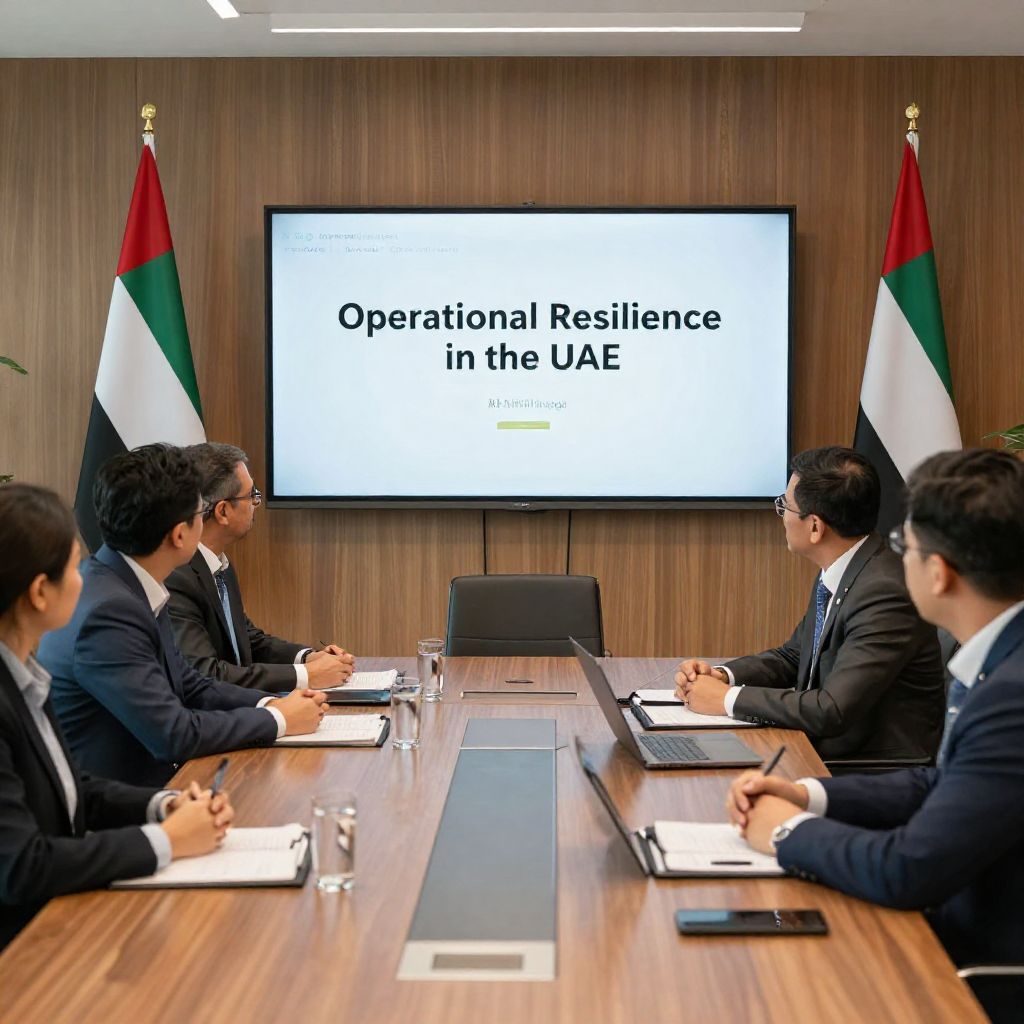
Across the UAE, business leaders are facing a new reality: disruption is no longer an occasional event - it is an ongoing operational risk. From cyber incidents and supply chain interruptions to regulatory changes and global economic uncertainty, organisations must now be prepared to maintain operations under a wide range of unexpected conditions. As a result, operational resilience has become a strategic priority for senior leadership and boards of directors.
Historically, Business Continuity Management (BCM) was often treated as a technical or compliance-driven function managed within risk or IT departments. However, the complexity of modern business environments has shifted this perception. Today, resilience is directly linked to an organisation's ability to protect revenue, maintain customer trust, and meet regulatory expectations.
In 2026, many UAE organisations are elevating operational resilience to the boardroom - driven in part by tightening expectations from regulators including the Central Bank of the UAE (CBUAE), the Dubai Financial Services Authority (DFSA), and ADGM's Financial Services Regulatory Authority (FSRA), all of which have issued or updated operational risk and continuity guidance in recent years. Operational resilience consulting is therefore becoming a key advisory service for organisations seeking to strengthen their governance frameworks and protect against disruption risks.
Operational resilience refers to an organisation's ability to anticipate, withstand, respond to, and recover from disruptions while continuing to deliver critical services. It extends beyond traditional disaster recovery or IT continuity plans, focusing on maintaining business operations across all functions during adverse events.
In practice, operational resilience requires coordination across multiple areas of the organisation. Risk management teams must identify potential vulnerabilities; IT departments must secure digital infrastructure; and leadership must ensure that decision-making structures support rapid responses during crises.
A strong resilience framework typically integrates several elements, including enterprise risk management, business continuity planning, crisis management procedures, and cybersecurity controls. When these systems operate cohesively, organisations are better equipped to manage disruptions without compromising service delivery or stakeholder confidence.
The increasing scale and complexity of business disruptions drive the shift toward board-level oversight of resilience. Recent global events have demonstrated how quickly operational risks can escalate into enterprise-wide crises.
Boards and executive leadership teams now recognise that operational resilience is directly tied to strategic stability. Without structured resilience planning, organisations may struggle to maintain operations during unexpected events, potentially affecting revenue streams, regulatory compliance, and market reputation.
Several factors have contributed to the growing importance of resilience governance:
These developments have prompted boards to ask a critical question: Is the organisation truly prepared to operate during disruption? Operational resilience consulting helps leadership teams answer that question with evidence-backed assessments and practical planning — not just theoretical frameworks.
Business Continuity Management remains one of the most important components of operational resilience. BCM focuses on ensuring that critical business functions can continue during and after a disruption.
A well-designed BCM program identifies essential business processes, evaluates potential disruption risks, and establishes procedures to maintain operations under adverse conditions. These procedures may include alternative operating locations, backup technology systems, crisis communication protocols, and recovery timelines.
However, modern BCM frameworks must extend beyond static documentation. Organisations must regularly test their continuity plans, update risk assessments, and ensure that staff understand their responsibilities during emergency scenarios. In the UAE context, sectors such as financial services, logistics, real estate, and government-linked entities face particularly high expectations for BCM maturity, given their systemic importance to the broader economy.
Operational resilience consulting often begins with evaluating the effectiveness of existing BCM frameworks and identifying areas where improvements are needed.
Operational resilience is closely linked to enterprise risk management. Traditional risk frameworks focus on identifying and mitigating potential threats, but resilience planning goes further by preparing organisations to respond effectively when those threats materialise.
Enterprise risk resilience consulting helps organisations integrate risk management with operational continuity strategies. This approach ensures that identified risks are supported by practical response mechanisms rather than remaining theoretical assessments.
Building an effective enterprise resilience framework means addressing five interconnected areas. The first is risk identification and scenario analysis — understanding which plausible disruptions pose the greatest threat to critical services. The second is impact assessment, evaluating how those disruptions would affect key business functions and stakeholder commitments. The third is resilience testing through structured simulations and tabletop exercises, ensuring that response plans work in practice rather than just on paper. The fourth is governance — establishing clear decision-making authority during a crisis so that the right people act quickly and with confidence. The fifth is continuous monitoring of the threat landscape, particularly as cyber risks, regulatory requirements, and geopolitical pressures evolve.
By aligning risk management with operational response strategies, organisations can strengthen their overall resilience posture.
Disruption risk has expanded significantly in recent years. Businesses must now prepare for a wider range of potential operational threats, including technology failures, regulatory disruptions, supply chain breakdowns, and geopolitical uncertainties.
Business disruption risk consulting focuses on identifying vulnerabilities within operational processes and developing strategies to reduce their impact. These strategies often involve improving system redundancies, diversifying supply chains, strengthening cybersecurity protections, and establishing crisis communication frameworks.
For leadership teams, the objective is not to eliminate disruption entirely - an impossible task - but to ensure that disruptions do not threaten the organisation's ability to operate effectively.
Organisations that proactively manage disruption risks are far better positioned to recover quickly and maintain stakeholder confidence.
Operational resilience cannot be delegated solely to operational teams. Effective resilience programs require active involvement from senior leadership and board members.
Executives play a critical role in establishing resilience priorities, allocating resources for risk management initiatives, and ensuring that resilience frameworks align with the organisation's long-term strategy.
Boards are increasingly asking leadership teams to demonstrate how resilience planning supports key objectives such as financial stability, regulatory compliance, and customer service continuity. This oversight ensures that resilience is embedded within the organisation's governance structure.
When resilience strategies are driven by the C-suite, organisations are more likely to implement comprehensive frameworks rather than isolated risk mitigation initiatives.
As operational risks continue to evolve, many organisations are turning to external advisors for guidance on building structured resilience frameworks. Operational resilience consulting helps businesses assess their existing capabilities and identify areas where improvements are needed.
Consultants typically conduct resilience maturity assessments that evaluate governance structures, risk management practices, continuity planning, and incident response mechanisms. Based on these assessments, organisations receive tailored recommendations for strengthening their resilience frameworks.
These advisory services also assist companies in aligning their resilience programs with international standards and regulatory expectations.
For organisations operating in complex environments, external expertise can provide valuable insights that strengthen both operational stability and strategic decision-making.
ASC Global provides specialised operational resilience consulting services to organisations across the UAE, with particular depth in financial services, real estate, logistics, and government-linked sectors. Our advisory approach integrates business continuity management, enterprise risk resilience, and governance oversight into a cohesive operational resilience strategy.
Our methodology is structured around three phases. We begin with a resilience maturity assessment - benchmarking the organisation's current BCM and risk frameworks against international standards such as ISO 22301 and UAE regulatory requirements. We then work with leadership to close identified gaps through targeted continuity planning, crisis governance design, and scenario-based testing. Finally, we support organisations in embedding resilience as an ongoing capability, not a one-time project.
Our team works closely with leadership teams to ensure that resilience frameworks are aligned with strategic objectives while meeting evolving regulatory expectations within the UAE.
Q1. What is operational resilience in business?
A1. Operational resilience refers to an organisation's ability to continue delivering critical services during disruptions and recover quickly from unexpected events.
Q2. Why is BCM important for operational resilience?
A2. Business Continuity Management ensures that essential business functions remain operational during disruptions, supporting overall organisational resilience.
Q3. Why are boards focusing on resilience governance?
A3. Boards recognise that operational disruptions can significantly affect financial stability, reputation, and regulatory compliance, making resilience a strategic leadership priority.
Q4. How can consulting services help organisations improve resilience?
A4. Resilience consultants evaluate organisational risks, strengthen governance frameworks, and design continuity strategies that help businesses respond effectively to disruptions.
Operational resilience is no longer a secondary risk management function — it has become a fundamental component of organisational governance. As businesses in the UAE face increasing technological, regulatory, and operational uncertainties, leadership teams must ensure that resilience frameworks are integrated into strategic planning.
By strengthening business continuity management, aligning enterprise risk frameworks, and preparing for potential disruptions, organisations can maintain operational stability and protect long-term value. Proactive resilience planning allows companies to navigate uncertainty with confidence while maintaining stakeholder trust.
If your organisation is evaluating its operational resilience capabilities, expert advisory support can help you identify vulnerabilities and build a stronger continuity framework.
To discuss operational resilience consulting and business continuity strategy, contact ASC Global UAE:
📞 Call: +971503287722
💬 WhatsApp: https://wa.me/971503287722
🌐 Visit: www.ascglobal.ae
📩 Email: info@ascglobal.ae
Office 04-1803, 18th Floor | One by Omniyat, Business Bay, Dubai
ASC Global helps organisations across the UAE strengthen governance frameworks, improve disruption readiness, and build sustainable operational resilience strategies.
Need more information on Operational Resilience in the UAE: Why BCM Is Now a Board-Level Priority?
 Risk Advisory
Dubai's Golden Visa programme has drawn a genuinely global pool of property investors, offering long-term residency in e...
Read More
Office 04 - 1803, 18th floor, One by Omniyat Business bay, Dubai
302-18 Edgecliff Golfway, North York, Toronto, Ontario M3C 3A3
Via F.lli Gabba 3, 20121 – Milan, Italy
RM2106, Huishangsha Edifice, No.37, Baoshi West RD, Shiyan Town, Bao’an District, Shenzhen - 518108, China
C-100, Sector 2, Noida (UP), Delhi NCR, India 201301
One Raffles Place, Tower 1, 27-03 Singapore - 048616
 Merger & Acquisition
 Due Diligence
 Business Advisory
 Business Setup & PRO
 Corporate Tax Advisory
 Accounting & Assurance
 Risk Advisory
 Tech & Cyber Security
 VAT Advisory